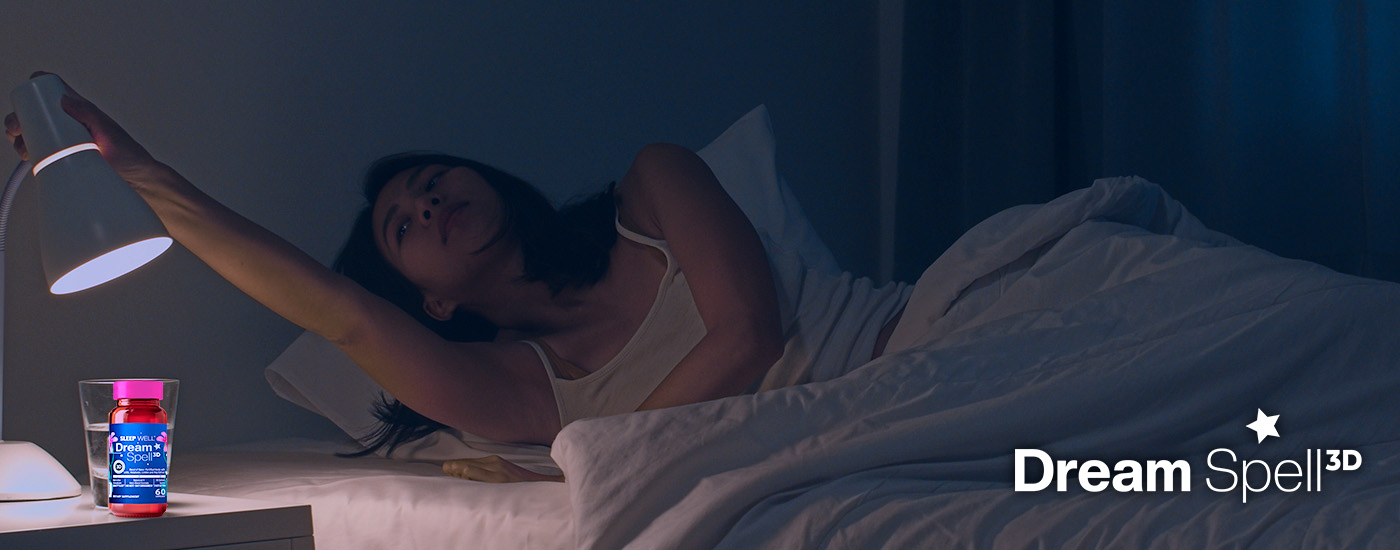
Do you often struggle with coming up with new ideas, solving problems, or completing projects? Do you feel like your creativity and productivity are not at their best? If so, you may be overlooking one of the most important factors that influence your cognitive performance: sleep.
Sleep is not just a passive state of rest, but a vital process that affects every aspect of your health and well-being. Sleep plays a crucial role in enhancing your creativity and productivity, as well as your mood, memory, learning, and overall mental health. In this blog post, we will explore how sleep affects your brain and why getting enough quality sleep is essential for unleashing your full potential.
How Sleep Affects Your Brain
Your brain is a complex organ that performs countless functions every day. It processes information, generates thoughts, emotions, and behaviors, regulates bodily functions, and stores memories. To do all these tasks efficiently, your brain needs to be well-rested and refreshed.
During an 8-hour sleep period, your body cycles 3 to 5 times through the stages of non-REM and REM sleep. One full cycle varies due to individual differences and takes roughly 75-90 minutes. Each stage rejuvenates your body and helps your mind sort and store information from the previous day¹.
Non-REM sleep consists of three stages of progressively deeper sleep that prepare your mind and body for deep sleep. During non-REM sleep, your brain waves slow down, your heart rate and blood pressure decrease, your muscles relax, and your body temperature drops. Non-REM sleep helps you consolidate new information, strengthen memory traces, and enhance cognitive skills.
REM sleep is the final stage of the sleep cycle, where you experience vivid dreams. During REM sleep, your brain waves become more active, similar to when you are awake. Your eyes move rapidly behind your eyelids, hence the name rapid eye movement. Your heart rate and blood pressure increase, and your breathing becomes irregular. However, your muscles are temporarily paralyzed to prevent you from acting out your dreams. REM sleep helps you integrate new information with existing knowledge, stimulate creative thinking, and process emotions.
Both non-REM and REM sleep are important for optimal brain function. However, different stages of sleep may have different effects on different aspects of cognition. For example, some studies suggest that non-REM sleep may be more beneficial for analytical problem-solving, while REM sleep may be more conducive to creative problem-solving. Therefore, getting a balanced amount of both types of sleep is essential for maximizing your cognitive performance.
How Sleep Improves Your Creativity
Creativity is the ability to generate novel and useful ideas or solutions to problems. Creativity involves two main processes: divergent thinking and convergent thinking. Divergent thinking is the ability to generate many different ideas or possibilities from a given topic or situation. Convergent thinking is the ability to narrow down the ideas or possibilities to find the best or most appropriate one.
Sleep can enhance both divergent and convergent thinking by facilitating various cognitive mechanisms that underlie creative thinking. Some of these mechanisms are:
– Memory consolidation: Sleep helps you consolidate new information into long-term memory by strengthening the neural connections that encode the information⁶. This allows you to access and retrieve the information more easily when you need it. Memory consolidation also helps you integrate new information with existing knowledge in your memory network⁷. This allows you to make novel associations and connections between different pieces of information that may not seem related at first glance.
– Insight formation: Sleep helps you form insights or sudden realizations that can help you solve problems or generate new ideas. Insight formation occurs when you restructure or reorganize the information in your memory in a new way that reveals a hidden solution or meaning. Sleep can facilitate insight formation by allowing your brain to process information in a more flexible and creative way during REM sleep. REM sleep can also activate brain regions that are involved in emotional processing, which can enhance insight formation by adding emotional value or motivation to the information.
– Incubation: Sleep helps you incubate or put aside a problem or idea for a while without consciously thinking about it. Incubation allows your subconscious mind to continue working on the problem or idea while you are asleep. Incubation can help you overcome mental blocks or impasses that prevent you from finding a solution or generating an idea when you are awake. Incubation can also help you generate more original and diverse ideas by allowing your subconscious mind to explore different perspectives or alternatives that you may not consider when you are awake.
How Sleep Improves Your Productivity
Productivity is the ability to complete tasks or projects efficiently and effectively. Productivity involves various cognitive skills such as attention, concentration, planning, organization, decision-making, problem-solving, and time management. Productivity also depends on your motivation, energy, and mood.
Sleep can improve your productivity by enhancing your cognitive skills and boosting your motivation, energy, and mood. Some of the ways that sleep can improve your productivity are:
– Attention and concentration: Sleep helps you maintain a high level of attention and concentration throughout the day by preventing fatigue and sleepiness. Attention and concentration are essential for focusing on the task at hand, filtering out distractions, and switching between tasks. Sleep also helps you improve your selective attention, which is the ability to focus on relevant information and ignore irrelevant information. Selective attention is important for avoiding errors and improving accuracy and quality of work.
– Planning and organization: Sleep helps you plan and organize your tasks or projects by improving your executive functions. Executive functions are higher-order cognitive skills that allow you to set goals, prioritize tasks, allocate resources, monitor progress, and adjust strategies. Sleep also helps you improve your working memory, which is the ability to hold and manipulate information in your mind for a short period of time. Working memory is important for following instructions, remembering details, and performing mental calculations.
– Decision-making and problem-solving: Sleep helps you make better decisions and solve problems more effectively by improving your cognitive flexibility. Cognitive flexibility is the ability to adapt to changing situations, rules, or demands. Sleep also helps you improve your metacognition, which is the ability to reflect on your own thinking and learning processes. Metacognition is important for evaluating your performance, identifying your strengths and weaknesses, and seeking feedback or improvement.
– Time management: Sleep helps you manage your time more efficiently by improving your self-regulation. Self-regulation is the ability to control your impulses, emotions, and behaviors. Sleep also helps you improve your self-efficacy, which is the belief in your own ability to complete tasks or achieve goals. Self-efficacy is important for setting realistic expectations, overcoming challenges, and persisting until completion.
– Motivation and energy: Sleep helps you increase your motivation and energy levels by regulating your hormones. Sleep affects the levels of hormones such as dopamine, serotonin, cortisol, and melatonin in your body. These hormones influence your mood, motivation, reward, stress, and circadian rhythm. Sleep can help you balance these hormones and optimize their effects on your motivation and energy levels.
– Mood: Sleep helps you improve your mood by reducing stress and anxiety. Sleep can help you cope with negative emotions and experiences by allowing your brain to process them during REM sleep. Sleep can also help you enhance positive emotions and experiences by increasing the activity of brain regions that are involved in emotional regulation.
How DreamSpell 3D Can Help You Sleep Better
If you want to improve your creativity and productivity, you need to get enough quality sleep every night. However, getting good sleep can be challenging for many people due to various factors such as stress, lifestyle habits, or medical conditions. If you are one of those people who struggle with falling asleep or staying asleep, you may benefit from using a natural-based sleep supplement like DreamSpell 3D.
DreamSpell 3D is a sleep supplement that uses a blend of nano-fortified herbs with GABA, melatonin, and hops extract to help you get the quality sleep that you need. DreamSpell 3D works by:
– Calming your racing mind: DreamSpell 3D contains GABA, a neurotransmitter that inhibits the activity of neurons in your brain. GABA can help you reduce stress, anxiety, and nervousness that can keep you awake at night. GABA can also help you relax your muscles and ease physical tension that can interfere with your sleep quality.*
– Regulating your sleep cycle: DreamSpell 3D contains melatonin, a hormone that regulates your circadian rhythm or internal clock. Melatonin can help you fall asleep faster by signaling to your brain that it is time to sleep. Melatonin can also help you stay asleep longer by maintaining a consistent sleep cycle throughout the night.*
– Enhancing your sleep quality: DreamSpell 3D contains hops extract, a herb that has sedative and hypnotic effects. Hops extract can help you improve your sleep quality by increasing the amount of deep sleep or slow-wave sleep that you get. Deep sleep is the most restorative stage of sleep that helps you rejuvenate your body and mind.*
DreamSpell 3D is designed to deliver fast-acting results with its 3D delivery system that ensures optimal absorption and bioavailability of the ingredients. DreamSpell 3D is also formulated to prevent next-day grogginess or hangover effects that some other sleep supplements may cause. DreamSpell 3D is safe to use as it does not contain any artificial ingredients or additives.
In conclusion, sleep is not a luxury but a necessity for optimal creativity and productivity. By getting enough quality sleep every night, you can unleash your full potential and achieve your goals. Whether you work in the creative field, are a mother and want to work on creative things or support your kids with their homework, or simply want to improve your well-being, sleep is the key to success. So, don’t underestimate the power of sleep and make it a priority in your life. You will be amazed by the results. Sleep well and dream big!
Sources
– American Psychological Association. (2020). Publication manual of the American Psychological Association (7th ed.). https://doi.org/10.1037/0000165-000
– Cai, D. J., Mednick, S. A., Harrison, E. M., Kanady, J. C., & Mednick, S. C. (2009). REM, not incubation, improves creativity by priming associative networks. Proceedings of the National Academy of Sciences, 106(25), 10130–10134. https://doi.org/10.1073/pnas.0900271106
– Diekelmann, S., & Born, J. (2010). The memory function of sleep. Nature Reviews Neuroscience, 11(2), 114–126. https://doi.org/10.1038/nrn2762
– Ellenbogen, J. M., Hu, P. T., Payne, J. D., Titone, D., & Walker, M. P. (2007). Human relational memory requires time and sleep. Proceedings of the National Academy of Sciences, 104(18), 7723–7728. https://doi.org/10.1073/pnas.0700094104
– Guilford, J. P. (1967). The nature of human intelligence. McGraw-Hill.
– Rasch, B., & Born, J. (2013). About sleep’s role in memory. Physiological Reviews, 93(2), 681–766. https://doi.org/10.1152/physrev.00032.2012
– Stickgold, R., & Walker, M. P. (2013). Sleep-dependent memory triage: evolving generalization through selective processing. Nature Neuroscience, 16(2), 139–145. https://doi.org/10.1038/nn.3303
– Wagner, U., Gais, S., Haider, H., Verleger, R., & Born, J. (2004). Sleep inspires insight. Nature, 427(6972), 352–355. https://doi.org/10.1038/nature02223
Save your cart?
x
We save your email and cart so we can send you reminders - don't email me.