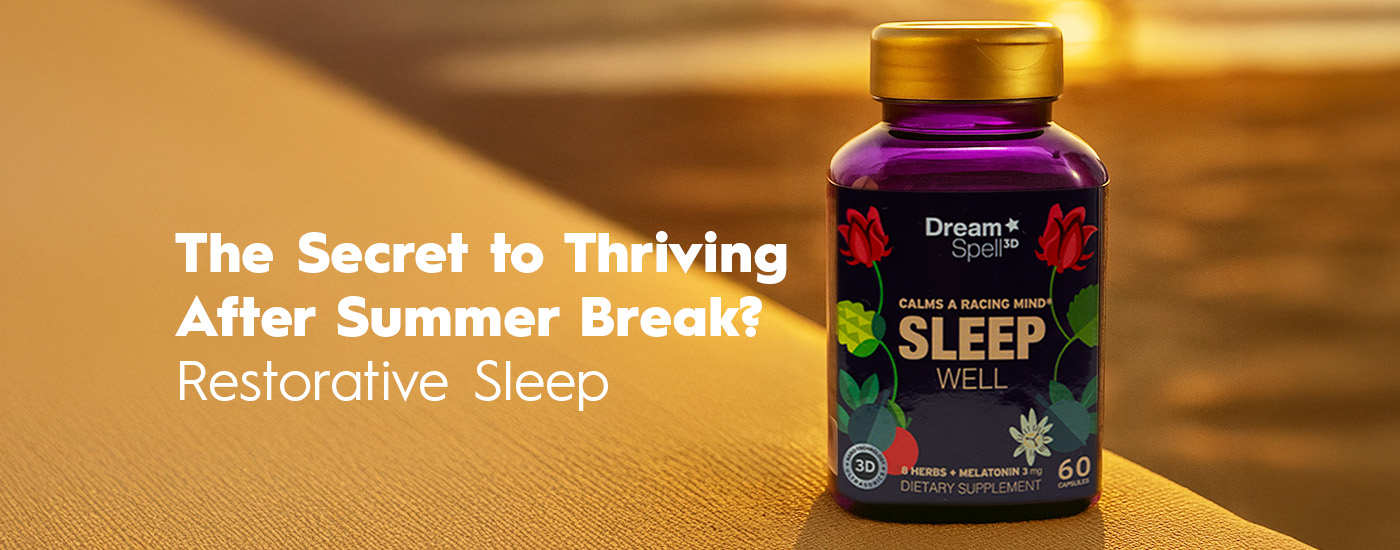
The Secret to Thriving After Summer Break? Restorative Sleep
The lazy days of summer are behind us — sunshine, late nights, and relaxed rhythms that often mean less structure in our daily lives. While those weeks of freedom feel refreshing, they can leave our internal clocks completely out of sync. As routines shift back into gear, whether for students heading back to school, parents supporting their kids, or professionals returning to demanding schedules, sleep deserves a front-row seat. Why? Because quality rest is the foundation that keeps focus sharp, moods balanced, and energy steady as everyone adjusts to new responsibilities.
Let’s explore how resetting your sleep schedule after summer break can benefit the entire family — and how DreamSpell 3D can support that transition with restorative, non-groggy sleep that leaves you refreshed and ready for tomorrow.
Why Sleep Is the Key to Thriving After Summer Break
Summer’s freedom often leads to later bedtimes, more screen time, and sleeping in without alarms. While enjoyable, these habits disrupt the body’s circadian rhythm, which is the natural 24-hour cycle that tells us when to feel awake and when to wind down. When this rhythm is misaligned, even getting eight hours of sleep can leave you feeling unrefreshed.
Restoring a steady sleep pattern is key for thriving in September and beyond. Better sleep not only helps with concentration and productivity but also strengthens immunity, balances hormones, and supports emotional stability. Whether you’re a student learning new material, a parent balancing multiple schedules, or a worker facing long days, consistent and restorative sleep is your strongest ally.
Resetting Your Sleep Schedule After Summer
Why Vacation Habits Disrupt Your Circadian Rhythm
During vacation, unstructured days allow for late-night movies, travel, and leisurely mornings. This flexibility can feel like a reward after months of routine, but it shifts the body’s sleep-wake cycle later and later, creating what experts call “social jet lag.” Your brain essentially forgets when bedtime is supposed to be, making the return to school or work mornings especially painful.
Simple Steps to Re-establish Consistency
To fix this, begin gradually shifting your bedtime and wake-up time earlier by 15 to 30 minutes every few nights. This gentle adjustment allows your body to readapt without shock. Pair the earlier bedtime with calming routines — dimming the lights, limiting screens, and practicing relaxation techniques — so your brain gets stronger signals that it’s time to rest. Within two to three weeks, your body clock can reset, making mornings feel far less draining.
Back to School Sleep Schedules for Kids
How Many Hours of Sleep Kids Need
Children between the ages of 6 and 12 need anywhere from 9 to 12 hours of sleep every night, depending on their age and level of activity. However, summer often pushes kids toward shorter nights and later mornings. Without adequate rest, children are more likely to experience irritability, poor concentration, and weakened academic performance during the school year. A lack of sleep also affects growth and immunity, which are vital during their developmental years.
Tips for Parents to Ease Bedtime Transitions
Parents can help their kids adjust by introducing bedtime routines a few weeks before school begins. Activities like a warm bath, bedtime story, or calming background music can serve as cues that it’s time to wind down. Keep wake-up times consistent, even on weekends, to prevent sleep debt from building. Avoiding screens in the evening is also crucial, as blue light from tablets and TVs can trick the brain into thinking it’s still daytime, delaying natural melatonin release.
Teenage Sleep Needs and Challenges
Why Adolescents Resist Early Bedtimes
Teenagers face unique challenges when it comes to sleep. Biological changes during adolescence shift the natural release of melatonin later into the evening, meaning teens often don’t feel tired until well past 11 p.m. Despite this, most schools require them to wake up early, creating a constant mismatch between biology and daily demands. This is why many teens struggle to stick to early bedtimes, no matter how much parents encourage them.
The Impact on Focus and Learning
Unfortunately, the result is widespread sleep deprivation among teens. Many adolescents get only 7–7.5 hours of sleep when they truly need 8–10 hours. This gap adds up quickly, leading to sleep debt that impacts mood, memory, and cognitive performance. Studies show that sleep-deprived teens struggle more with academic performance and emotional regulation, and they may even face long-term risks to mental health. Supporting teens with structured routines, reduced evening screen use, and consistent sleep environments can help them reclaim valuable rest.
College Students and Sleep Deprivation
Balancing Late-Night Study with Early Lectures
For college students, irregular sleep schedules are almost a rite of passage. Between late-night study sessions, social activities, and early lectures, many students cut their nightly rest short. Unfortunately, this habit undermines academic performance and overall well-being. Research shows that sleep deprivation in young adults is tied to lower grades, poor concentration, and even weakened immune systems — outcomes no student can afford during an already stressful semester.
Sleep Hygiene Tips for College Life
The key for students is practicing basic sleep hygiene even within the chaos of college life. That means setting consistent “sleep windows” when possible, reducing caffeine after midday, and keeping dorm rooms dark and quiet at night. Exposure to natural light in the morning helps reset circadian rhythm, signaling to the brain that it’s time to wake up. While it may not always be possible to get nine perfect hours, prioritizing regular rest can make a world of difference in energy, focus, and long-term health.
Overcoming Bedtime Challenges at Home
Crafting a Bedtime Routine
For many families, the biggest challenge isn’t knowing the right bedtime — it’s getting kids to stick to it. Resistance is common, especially after a summer of freedom. One way to overcome this is by creating bedtime rituals that children look forward to, such as a favorite story, calming music, or even gentle stretches. These activities train the brain to associate specific cues with sleep, making bedtime feel like a natural transition rather than a battle.
Throttle Screen Time for Better Sleep
Another essential step is limiting screen exposure in the evening. Tablets, televisions, and phones emit blue light that suppresses melatonin production, delaying sleep onset. Experts recommend turning off devices at least one hour before bed and replacing them with low-stimulation activities like reading or journaling. Not only does this improve sleep quality, but it also reduces nighttime battles, as kids come to expect calmer evenings.
Gradual Shifts for Better Adjustment
Adjust Wake-Up Times First
If bedtime feels impossible to change, focus on wake-up times first. By waking up 30–60 minutes earlier, you naturally set the stage for earlier bedtimes. Even if your child resists at first, their body will eventually feel sleepy earlier in the evening. This approach is particularly helpful in the weeks before school starts, easing the shock of that first early alarm.
Morning Light to Reset the Clock
Pair earlier wake-ups with morning sunlight exposure whenever possible. Natural light plays a powerful role in regulating circadian rhythms. Just 20–30 minutes of light exposure in the morning helps “reset” the brain’s internal clock, improving the chances of earlier sleep onset at night. Over time, these small adjustments lead to lasting improvements in both sleep quality and daytime energy.
Why Sleep Quality Matters More Than Sleep Quantity
Deep vs. Light Sleep
Not all hours of sleep are created equal. Light sleep helps you transition between stages, but deep sleep — also known as slow-wave sleep — is when your body performs its most important restorative functions. This stage supports memory consolidation, muscle repair, and immune system strengthening. Without enough deep sleep, even a full eight hours may leave you feeling sluggish.
How Restorative Sleep Helps Learning
High-quality sleep supports cognitive processes like memory, problem-solving, and creativity. Students who achieve more restorative sleep perform better academically, while adults benefit from improved decision-making and emotional regulation. It’s not just about sleeping longer — it’s about sleeping better. That’s where intentional routines and natural sleep support can make a big difference.
The Role of Natural Support in Sleep Cycles
Herbs and Nutrients That Calm
Nature offers powerful tools for sleep support. Herbs like passionflower, lemon balm, hops, and hibiscus have been used for centuries to calm the nervous system and promote relaxation. Modern science confirms their potential in reducing anxiety and supporting better sleep onset. Combined with calming neurotransmitters like GABA, they create a foundation for deeper, restorative rest.
Melatonin’s Role in Circadian Balance
Melatonin, a hormone naturally produced by the body, signals when it’s time to wind down. However, lifestyle factors like screen use, stress, and irregular schedules can disrupt melatonin release. Supplementing with carefully balanced amounts helps restore the circadian rhythm, guiding the body into a healthy sleep cycle without dependency or grogginess.
DreamSpell 3D: Smarter Sleep for Busy Lives
3D Nano-Fortified Ultrasonics Explained
DreamSpell 3D isn’t just another sleep aid — it’s an advanced approach to wellness. By using 3D Nano-Fortified Ultrasonics, a technology that bonds ingredients at the molecular level, DreamSpell ensures faster, more complete absorption. This means your body can fully access the benefits of each ingredient, without waste or delay. The process uses no harsh chemicals or heat, preserving the integrity of delicate plant compounds.
Benefits of Restorative, Non-Groggy Support
The result is a formula that works in harmony with your body to promote calmness, balance, and deep sleep. Unlike traditional sleep aids, DreamSpell 3D is designed to be non-habit forming, supporting natural rhythms instead of overriding them. You wake feeling refreshed, alert, and clear-headed — not groggy or dependent. For parents, students, and professionals alike, it’s a smarter way to face demanding routines.
Building Rest into Your Family’s Routine This September
Tips to Protect Family Sleep Habits
The back-to-school season is the perfect time to reset not just individual sleep habits, but the family’s as a whole. Establishing shared wind-down rituals — such as dimming lights, reading together, or enjoying calming teas — reinforces the importance of rest for everyone. Protecting these routines as part of your household schedule ensures that no one falls into the trap of sleep neglect once the busy season begins.
How Better Nights Transform Your Morning Routine
When rest is prioritized, mornings transform from chaotic scrambles into smoother starts. Children wake up with more energy and focus, parents feel less stressed, and college students tackle their day with sharper minds. Simply put, better nights create better days. Making restorative sleep a cornerstone of your family’s September routine is one of the most effective ways to thrive after summer break.
Conclusion
Returning from summer break doesn’t have to feel overwhelming or exhausting. By taking intentional steps to reset sleep rhythms — including adjusting schedules gradually, establishing routines, and supporting the body with natural ingredients — families and individuals alike can thrive in the transition. Restorative sleep is not just about closing your eyes, but about giving your body and mind the chance to heal, recharge, and reset.
DreamSpell 3D makes that journey smoother. With its innovative 3D Nano-Fortified Ultrasonics technology and natural blend of calming herbs and nutrients, it helps you access deep, refreshing sleep without the grogginess. Whether you’re a parent, a student, or simply someone trying to keep up with September’s demands, DreamSpell 3D can be the difference between merely surviving the season — and thriving through it.